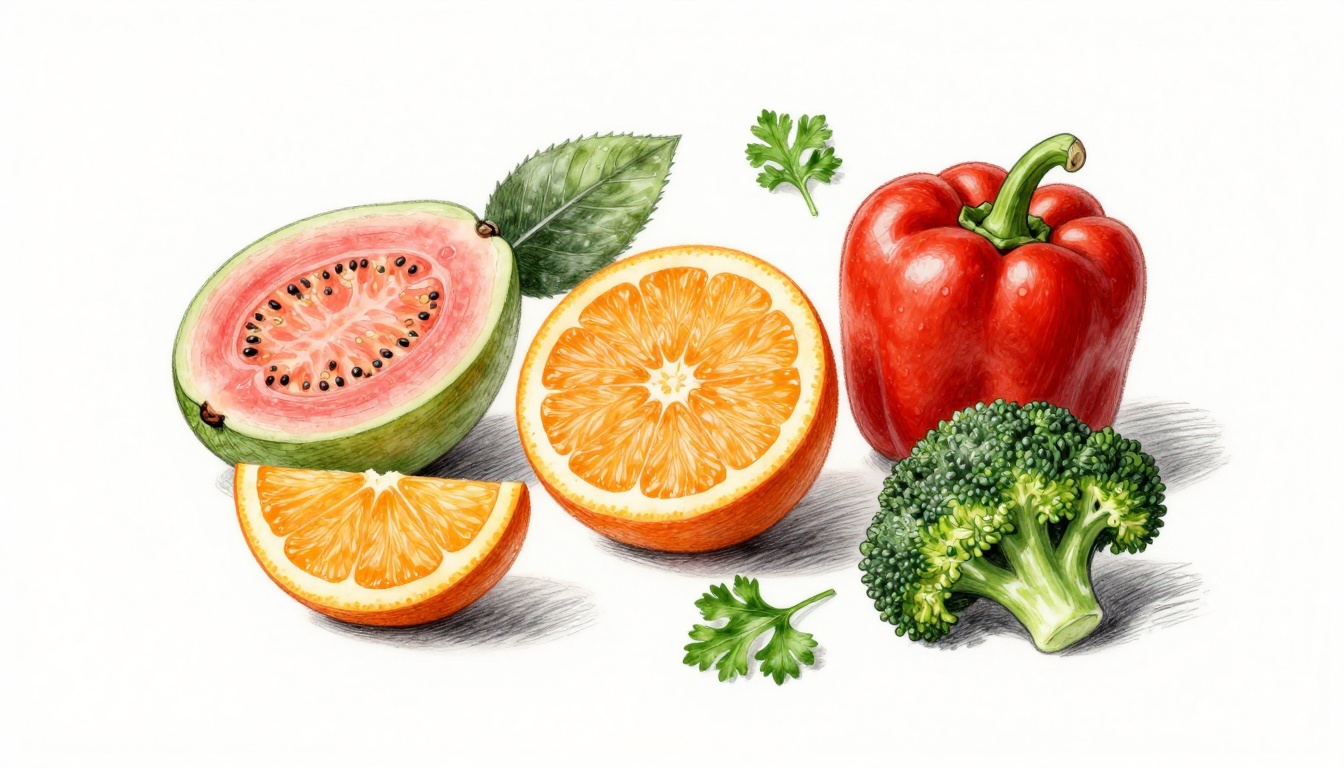
Ever feel run down during cold season? Vitamin C steps in to boost your immune system, fight infections, and keep your skin firm. It helps build collagen for healthy tissues and works as an antioxidant to shield cells from damage.
Your body can’t store this nutrient because it’s water-soluble. You must get it from food each day. Adult women need 75 mg, men 90 mg. Smokers require an extra 35 mg, and pregnant women aim higher at 85 mg.
Luckily, many everyday foods deliver plenty. This post breaks down the best fruit sources, veggie powerhouses, and unexpected finds. You’ll also learn simple ways to keep vitamin C potent in meals.
Top Fruits Bursting with Vitamin C for Easy Boosts
Fruits offer a tasty way to hit your daily vitamin C goal. They beat supplements because they provide fiber and other nutrients too. Fresh ones shine brightest since heat and storage can cut vitamin C levels.
Guava tops the list at 228 mg per cup, or more than twice the RDA for men. One cup covers your needs and leaves extra for antioxidants. Slice it for snacks; its tropical flavor refreshes any day.
Kiwi follows close with 71 mg per fruit. You get skin benefits from eating the fuzzy peel if you like. It’s perfect for salads or yogurt parfaits.

Strawberries pack 98 mg per cup. A handful boosts immunity without added sugar. They’re great frozen in smoothies too.
Check this quick comparison from USDA data:
| Fruit | Serving Size | Vitamin C (mg) | % RDA (90 mg)* |
|---|---|---|---|
| Guava | 1 cup | 228 | 253% |
| Strawberries | 1 cup | 98 | 109% |
| Kiwi | 1 medium | 71 | 79% |
| Orange | 1 medium | 70 | 78% |
| Papaya | 1 cup | 89 | 99% |
| Pineapple | 1 cup | 80 | 89% |
*Percentages based on men’s RDA; women adjust down slightly.
These fruits shine in season. Buy local for peak freshness. Eat raw to lock in every milligram.
Citrus Fruits: Your Go-To for Reliable Vitamin C Hits
Oranges deliver 70 mg per medium fruit, almost your full daily amount. One covers needs for most adults. Lemons and limes add zest; a lemon has 31 mg.
Grapefruit offers 38 mg per half. Pink varieties bring extra antioxidants like lycopene. Always eat the whole fruit. Juice lacks fiber, which slows sugar spikes.
For details on citrus nutrients, see the NIH Vitamin C fact sheet. It confirms why whole fruits win.
Squeeze lemon into water daily. It refreshes and supports collagen.
Berries and Tropical Gems That Surprise with High Levels
Strawberries lead berries at 98 mg per cup. Raspberries give 32 mg, blueberries 14 mg. Pair blueberries with kiwi for a bigger boost.
Kiwi surprises with 71 mg per fruit, more than oranges for skin health. Its enzymes aid digestion too.
Tropical picks like papaya (89 mg per cup) and pineapple (80 mg) add adventure. Mango trails at 36 mg per cup but tastes sweet. Grab these for smoothies. They make meeting goals fun.
Vegetables That Deliver More Vitamin C Than You Expect
Vegetables often outshine fruits in vitamin C punch. Colorful ones pack the most because pigments link to antioxidants. Steaming keeps levels high; boiling leaches it out.
Red bell peppers rule with 190 mg per cup raw. That’s over twice an orange. Slice into salads for crunch.
Broccoli provides 81 mg per cooked cup. Brussels sprouts match at 75 mg. Kale hits 80 mg raw.
Tomatoes add 23 mg per large one. Use in sauces or fresh.
Here’s a USDA-based overview:
| Vegetable | Serving Size | Vitamin C (mg) | % RDA (90 mg)* |
|---|---|---|---|
| Red bell pepper | 1 cup raw | 190 | 211% |
| Broccoli | 1 cup cooked | 81 | 90% |
| Brussels sprouts | 1 cup | 75 | 83% |
| Kale | 1 cup raw | 80 | 89% |
*Men’s RDA basis.
Incorporate them in stir-fries or roasts. Variety ensures steady supply.

Bell Peppers and Cruciferous Champs
Red bell peppers top charts at 127 mg per 100g raw. Green ones lag at 80 mg per cup. Choose red for max payoff.
Broccoli retains 90% vitamin C when steamed. Roast Brussels sprouts for 75 mg per cup. Their crisp texture pairs with meats.
These veggies fit weeknight dinners easily.
Leafy Greens and Other Veggie Stars
Kale delivers 80 mg per cup raw. Sautee lightly to preserve it. Spinach offers 28 mg but oxalates hinder absorption; eat moderately.
Potatoes surprise with 27 mg per medium baked (skin on). A large one nears 50 mg. Tomatoes in salsa add up quick.
Build salads around these stars.
Hidden Gems and Smart Tips to Maximize Your Intake
Some foods sneak vitamin C into routines without fanfare. Others need kitchen tweaks to shine. Focus here to stretch every bite.
Potatoes count as a staple source. Herbs like parsley pack 133 mg per 100g; chop into salads.
Liver or fish roe offer animal-based options, but plants dominate for most.
For precise values, check USDA FoodData Central.
Everyday Foods You Already Eat That Sneak in Vitamin C
Sweet potatoes give 20 mg per medium. Cabbage adds 37 mg per cup shredded. Cantaloupe brings 36 mg per cup.
These fit breakfasts or sides. No big changes needed.
Proven Ways to Keep Vitamin C Potent in Your Kitchen
Cut produce right before eating. Air and light zap vitamin C fast. Store in the fridge, covered.
Steam or microwave briefly. Avoid boiling or copper pots, which destroy it.
Pair with iron-rich foods like spinach. Vitamin C boosts iron uptake.
Make smoothies blending kiwi, strawberries, and kale. One glass hits goals.
Fresh, raw choices preserve vitamin C best. Whole foods absorb better than pills.
Ditch the myth that only citrus works. Variety keeps it exciting.

Fruits like guava and strawberries lead the pack. Veggies such as peppers and broccoli deliver reliable hits. Aim for 75-90 mg daily to support immunity and skin.
Whole foods provide extras like fiber that pills miss. Start small. Pick three new items this week, like kiwi, red peppers, and kale.
What vitamin C food will you try first? Share in the comments. Build habits for lasting health. Your body thanks you.
(Word count: 1,482)