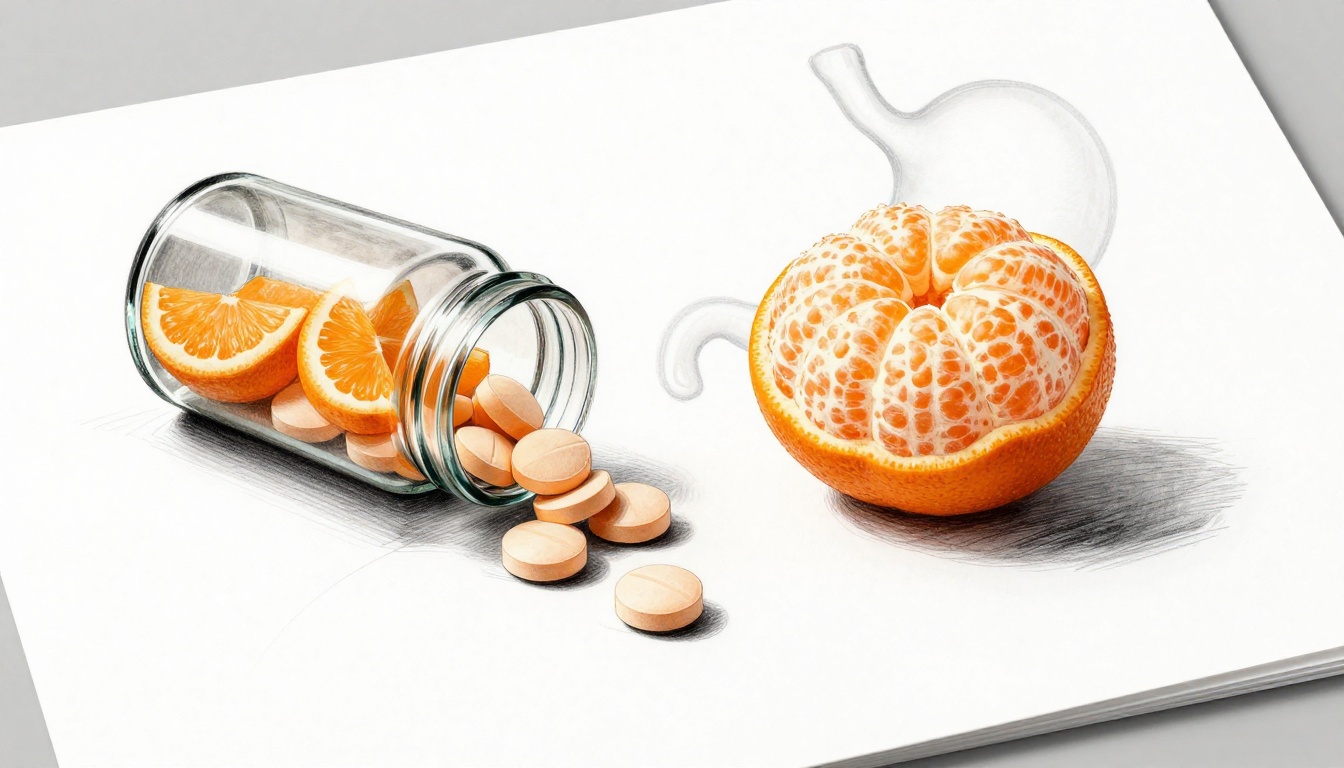
You grab that bottle of vitamin C supplements during cold season. You pop a few extra pills, hoping to kick the sniffles faster. Hours later, your stomach churns with cramps and diarrhea.
Vitamin C seems harmless. It’s water-soluble, so your body flushes out most excess through urine. But supplements over 2,000 mg daily can upset your gut. Adults need just 75 mg for women or 90 mg for men each day. The upper limit sits at 2,000 mg to dodge side effects. Food sources like oranges stay safe, no matter how many you eat. Supplements pack a punch, though.
We’ll cover symptoms to spot early. You will learn safe doses by age. Some folks face higher risks. Myths about megadosing get busted too. Stick around for simple tips to get benefits without the backlash.
What Happens When You Take Too Much Vitamin C? Spot the Signs Early
High doses from pills trigger issues fast. Your body absorbs only so much. The rest irritates your intestines. Doses above 2,000 mg daily cause trouble for most adults. Food never does this because absorption slows naturally.
Common signs hit the gut first. Diarrhea loosens stools within hours. Nausea turns your appetite sour. Vomiting follows in bad cases. Stomach cramps twist like a bad meal. Bloating puffs you up. Heartburn burns your chest. Headaches pound too.
Rarer problems emerge over time. Rashes or itching appear on skin. Sleep disrupts from discomfort. Kidneys form more oxalate, raising stone risk. Extra vitamin C boosts iron uptake, which overloads some bodies. It skews blood sugar tests for diabetics.
These stem from supplements alone. Mayo Clinic details these effects in healthy adults. Your gut rebels because it can’t process the flood. Cut back, and symptoms fade quick.
Everyday Gut Reactions to Watch For
Diarrhea tops the list. Loose, watery stools start 4 to 12 hours after a big dose. Nausea builds slowly, then hits hard. Cramps grip your belly like knots.
Heartburn rises from esophagus irritation. It feels like acid reflux on steroids. These kick in at 2,000 to 3,000 mg. Drink plenty of water to flush it out. Drop your dose next time. Eat bland foods until it passes. Most folks recover in a day.
Less Common but Serious Warning Signs
Kidney stones form from oxalate buildup. High doses raise oxalate by 20 percent or more. Stones cause sharp flank pain and bloody urine.
Iron overload happens if you absorb too much. It burdens the liver over weeks. Anemia shows in rare blood issues. These stay uncommon in healthy people. Watch if symptoms linger past 48 hours.
How Much Vitamin C Is Safe? Daily Needs and Upper Limits Explained
Your body craves vitamin C for immunity, skin repair, and iron absorption. But needs stay low. Adults hit goals with one orange or bell pepper. Supplements help if diet falls short. No big updates changed guidelines in 2026.
Smokers add 35 mg extra daily. Pregnant women bump to 85 mg. Breastfeeding moms need 120 mg. Kids scale down by age. Upper limits protect against gut woes.
Here’s a quick RDA table from U.S. guidelines. It shows daily amounts to meet needs.
| Age Group | RDA (mg/day) |
|---|---|
| 1-3 years | 15 |
| 4-8 years | 25 |
| 9-13 years | 45 |
| Girls 14-18 years | 65 |
| Boys 14-18 years | 75 |
| Women 19+ | 75 |
| Men 19+ | 90 |
| Pregnant 19+ | 85 |
| Breastfeeding 19+ | 120 |
Upper limits follow a similar pattern. Adults cap at 2,000 mg. This table sums them up.
| Age Group | UL (mg/day) |
|---|---|
| 1-3 years | 400 |
| 4-8 years | 650 |
| 9-13 years | 1,200 |
| 14-18 years | 1,800 |
| Adults 19+ | 2,000 |
These prevent side effects. NIH fact sheet confirms the numbers. Calculate yours based on age and habits.
RDA Breakdown for Adults and Kids
Women get by on 75 mg. Men need 90 mg. It fights free radicals and builds collagen. Kids start at 15 mg for toddlers. Teens near adult levels. Immunity strengthens. Skin heals faster. Iron from plants absorbs better.
Why the 2,000 mg Upper Limit Matters
This tolerable level avoids diarrhea and cramps. At-risk folks drop lower, like 1,000 mg with stone history. Food sources ignore the cap. One kiwi packs 70 mg safely. Multivitamins often stay under 100 mg. Cold remedies push higher, so check labels.
Who’s Most at Risk from Extra Vitamin C? Know Your Vulnerabilities
Most handle extra fine short-term. But some groups face bigger hits. Kidney issues top the list. High oxalate forms stones easier. Iron disorders like hemochromatosis overload fast.
G6PD deficiency bursts red blood cells. Diabetics see false readings. Long-term megadoses strain kidneys rarely. One big dose passes quick. Talk to your doctor if conditions apply.
Recent studies flag these without new scares in 2025 or 2026. Healthy bodies bounce back. Assess your health first.
Health Conditions That Raise Red Flags
Kidney disease slows clearance. Stones double in risk. Hemochromatosis absorbs excess iron, harming organs.
G6PD lacks an enzyme; high doses trigger hemolysis. Diabetics get skewed glucose tests. History of stones? Stay under 1,000 mg.
Vitamin C Megadosing Myths Busted: What Science Really Says
Megadosing promises cold cures or cancer fights. Truth falls short. It’s not always safe. Gut harm starts at 2,000 mg. Food overdoses? Impossible.
Cures everything? Studies show mild cold relief at most. No strong cancer proof. 2025 trials confirm side effects outweigh perks for healthy folks. LOVIT sepsis study even noted organ risks from IV highs.
Heard megadoses boost immunity huge? They don’t beat RDA much. Stick to food first: strawberries, broccoli. If overdosed, hydrate and cut back. See a doc for lasting issues. Balance wins.
Merck Manual covers excess risks simply.
Yes, you can take too much vitamin C. Gut woes hit quick over 2,000 mg from pills. Stick to RDA levels: 75 to 90 mg daily for adults. Kids need less. Food delivers safely every time.
Certain folks watch closer: kidney patients or iron overload cases. Myths fade under science. Megadoses don’t magic away ills.
Check your supplement labels today. Load up on citrus instead. Got risks? Chat with your doctor. What’s your go-to vitamin C source? Share below.