You wake up with a scratchy throat and stuffy nose. Another cold strikes at the worst time. Your immune system works overtime to fight off germs like viruses and bacteria. It sends white blood cells to attack invaders and clear infections.
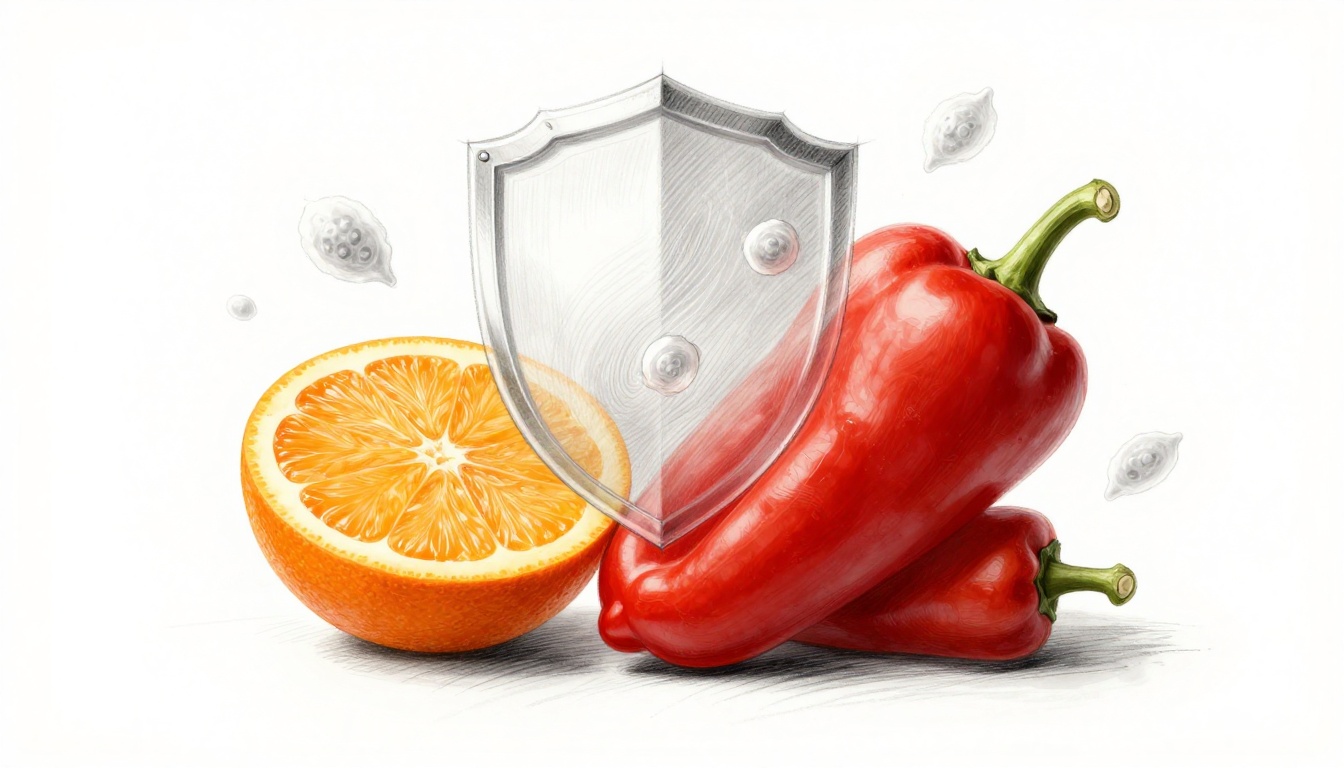
Vitamin C plays a key role in this process. This simple nutrient from foods like oranges and peppers strengthens your defenses. People often turn to it during cold season because it’s cheap and easy to get. But how exactly does it support immunity?
In this post, we’ll break down its work inside your body, review the science, and share ways to get more. You’ll walk away with practical steps to stay healthier.
What Exactly Does Vitamin C Do Inside Your Body?
Vitamin C, or ascorbic acid, acts as an essential nutrient. Your body can’t make it, so you get it from diet. It supports many jobs, like building collagen for skin and helping absorb iron from plants. For immunity, it shines brightest.
This water-soluble vitamin flushes out daily, so regular intake keeps levels steady. Immune cells grab it fast. They hold concentrations up to 100 times higher than in blood. Think of it as fuel for your body’s front-line defenders.
Fun fact: Sailors once suffered scurvy from low vitamin C. Gums bled, wounds wouldn’t heal, and infections raged. British navy added citrus in the 1700s, and cases dropped.
Acting as a Powerful Antioxidant Shield
Germs cause oxidative stress. They produce free radicals that damage cells. Vitamin C steps in as an antioxidant. It neutralizes those radicals before harm spreads.
It also recycles other antioxidants, like vitamin E. This teamwork keeps immune cells healthy during fights. Without it, cells weaken, and infections last longer. Picture it like oil on a bike chain. It prevents rust from daily wear.
For more on antioxidants, check the NIH Vitamin C overview.

Boosting White Blood Cell Power and Production
White blood cells, or leukocytes, lead the charge. Vitamin C enhances them in key ways. Neutrophils move faster and engulf bacteria better through phagocytosis.
Lymphocytes, like T-cells, get a production boost from stem cells. Motility improves too. They reach infection sites quicker. Studies on human cells show clearer infections faster.
In short, vitamin C makes your immune soldiers stronger, quicker, and more numerous.
How Vitamin C Strengthens Your Defenses Against Everyday Threats
Daily threats like colds and flu test your barriers. Vitamin C helps repair and reinforce them. It doesn’t cure illness alone. Yet it speeds recovery and eases symptoms.
Collagen production tightens skin and gut linings. These physical walls block germ entry. Interferon levels rise too. This protein fights viruses directly.
Inflammation drops, and histamine release slows. Colds feel less miserable as a result.
Repairing Skin and Gut Barriers to Block Germs
Collagen forms tough layers. Vitamin C provides the glue. Skin stays intact against cracks where bacteria slip in. Gut linings seal tight to stop pathogens.
Low levels weaken these barriers. Infections follow. Eat vitamin C-rich foods to maintain strength. Peppers and strawberries top the list for daily protection.
Enhancing Antibodies and Antiviral Responses
Antibodies like IgA guard mucus membranes. Vitamin C raises their output. IgG and IgM circulate to tag invaders. T-cells multiply faster.
Meta-analyses show colds shorten by 8 to 14 percent. Regular use cuts duration most in kids and adults under stress. Oral doses aid routine defense.
What the Science Really Says About Vitamin C and Immunity
Research spans decades. Linus Pauling championed high doses in the 1970s. Modern studies validate milder benefits. Cochrane reviews confirm it doesn’t prevent colds in general populations. But it helps those under physical stress.
Post-pandemic work links it to respiratory health. A 2023 review noted faster recovery in COVID patients with supplements. Dosages matter. Up to 1-2 grams daily show effects during illness.
Limitations exist. Genetics affect needs. Smokers require 35 mg more per day.
Here’s a quick look at standout studies:
| Study | Group | Key Finding |
|---|---|---|
| Hemilä 2013 meta-analysis | General adults | 8% shorter colds |
| Cochrane 2013 review | Marathon runners | 50% less illness risk |
| 2022 respiratory trial | COVID outpatients | Reduced symptoms by 20% |
Benefits shine brightest with consistent intake. For details, see Cochrane’s cold review.
Smart Ways to Ramp Up Your Vitamin C Intake Today
Adults need 75 mg for women, 90 mg for men daily. Smokers add 35 mg. Upper safe limit hits 2,000 mg to avoid stomach upset.
Food beats pills for extras like fiber. Heat destroys some, so eat raw when possible.
Top Foods Packed with Immune-Boosting Vitamin C
Bell peppers pack 190 mg per cup raw. One red pepper meets your daily need.
Oranges offer 70 mg each. Kiwi hits 71 mg per fruit. Broccoli gives 81 mg cooked cup. Strawberries deliver 98 mg per cup. Guava tops with 125 mg per fruit. Brussels sprouts add 75 mg per half-cup.
Mix them in salads, smoothies, or snacks. Try sliced kiwi with yogurt for breakfast.

When Supplements Make Sense and How to Choose Them
Supplements help if diet lacks. Athletes or stressed folks benefit most. Choose ascorbic acid or buffered forms to ease digestion.
Start at 500 mg split doses. Food sources absorb best, so pair them. Consult a doctor before high amounts, especially with conditions.
Vitamin C shines in everyday health. It shields cells from damage, powers white blood cells, repairs barriers, and boosts antibodies. Science backs shorter illnesses with steady supply.
Add one high-C food today, like a bell pepper salad. Track how you feel over weeks. Small habits build strong immunity. What vitamin C food will you try first?