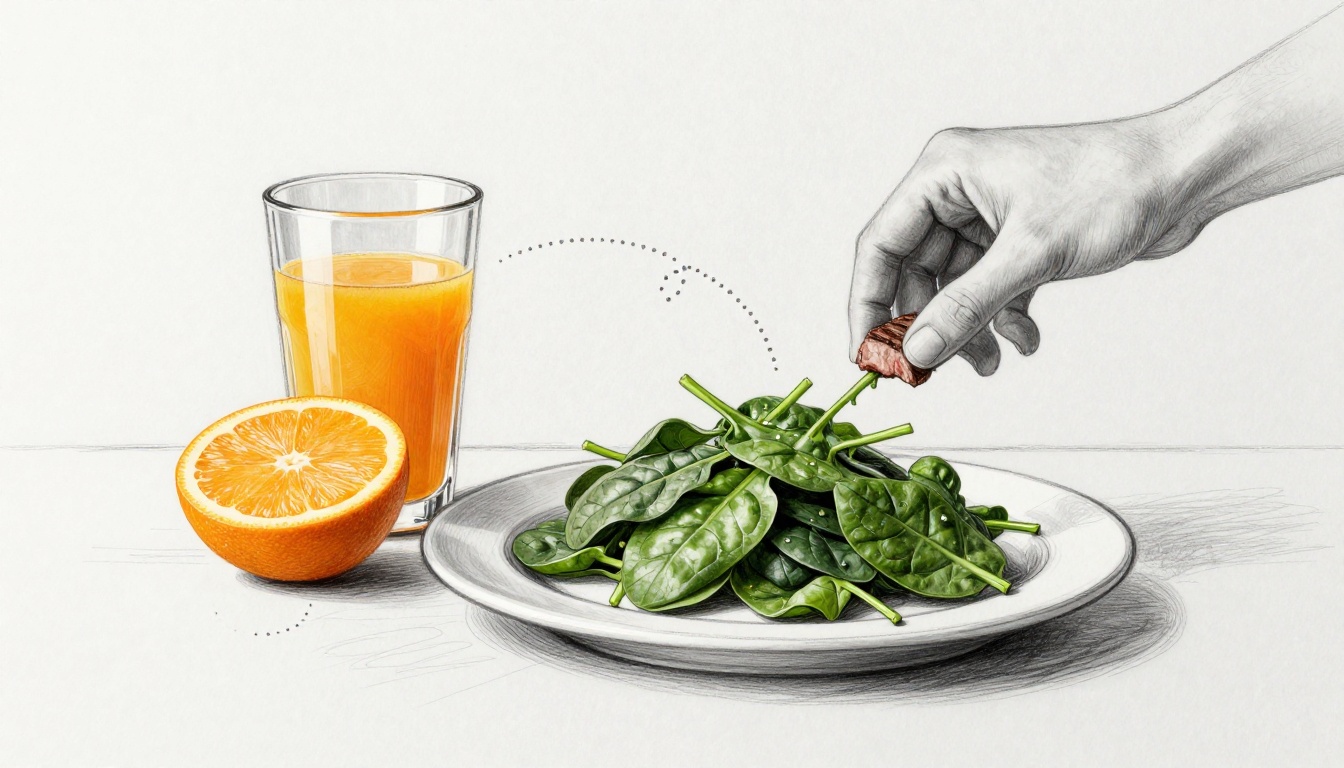
Imagine dragging through your day, yapping at coffee for a boost that never comes. You’re wiped out, foggy-headed, and snaps at little things. Sound familiar? Low iron hits about 1 in 4 women worldwide, leaving them tired because iron shuttles oxygen through blood for steady energy.
Iron comes in two forms. Heme iron from meat absorbs well on its own. Non-heme iron from plants? It slips away unless you pair it right. That’s where Vitamin C steps in. It can ramp up non-heme absorption up to six times.
You’ll see how iron types differ, why Vitamin C unlocks it, tasty food matches, who needs it most, and easy tips. Small tweaks mean real pep in your step.
Breaking Down Iron: Types and What Affects Absorption
Your body grabs only some iron from food. Rates swing from 1 to 40 percent, depending on the source and what’s on your plate. Poor uptake leads to anemia. You feel weak, skin pales, and focus fades.
Take Sarah. She ate spinach salads daily but stayed drained. Why? Plant iron needs help. Meat eaters fare better, yet even they lose ground from blockers. Understanding this sets up smarter eating.
Absorption hinges on form and foes. Body needs 8 to 18 mg daily, more for some. Yet daily meals waste most unless you intervene.
Heme Iron from Meat Absorbs Easily, But Plant Iron Needs a Boost
Heme iron hides in animal foods. Red meat, poultry, and fish deliver it. Your gut pulls in 15 to 35 percent without effort.
Non-heme iron fills plants. Beans, spinach, nuts, and grains pack it. But uptake lags at 2 to 20 percent. Most folks mix sources. Plant-heavy eaters face shortfalls.
Here’s a quick look:
| Iron Type | Sources | Absorption Rate |
|---|---|---|
| Heme | Steak, chicken, fish | 15-35% |
| Non-heme | Spinach, lentils, quinoa | 2-20% |
This table shows the gap. Vegans lean hard on non-heme. Boosters close it fast.

For details on daily needs, check the NIH iron fact sheet.
Sneaky Factors That Block Iron from Entering Your Bloodstream
Blockers bind iron tight. Phytates in grains and beans grab it first. Polyphenols from tea or coffee do the same. Calcium in milk competes. High-fiber meals slow the works.
You sip tea with lunch? It cuts uptake by half. Dairy smothers spinach iron. Space them out. Eat iron foods first, then tea later.
Science backs this. Inhibitors form complexes your gut ignores. Simple fix: timing. No tea or cheese with steak or salad.
The Magic of Vitamin C: How It Supercharges Iron Uptake
Vitamin C tops the list for non-heme help. It pairs best with plants. Just 50 to 100 mg, like one orange, doubles or triples pull-in. It battles blockers too.
Think of it as a spotlight on iron. Body grabs more when they team up. Studies show consistent wins. You’ll feel it in energy.
Fresh sources beat pills. They work in meals. Adults aim for 75 to 90 mg daily. Easy with fruit.
What Happens Chemically When Vitamin C Meets Iron
Vitamin C shifts ferric iron, Fe3+, to ferrous, Fe2+. The body prefers Fe2+. It slips through gut walls easier.
Vitamin C chelates iron too. It shields from phytates and such. Picture it as a bodyguard escorting iron past guards.
Gut cells use DMT1 transporters for Fe2+. Vitamin C preps it perfectly. No complex terms needed. Result? More iron in blood.
This duo shines in plant meals. Add squeeze of lemon, watch magic.
Real Studies Prove Vitamin C Delivers Results
Research nails it. 1980s trials found 100 mg Vitamin C lifts absorption 67 percent. Recent reviews confirm 2 to 6 times boosts.
A key Harvard review on Vitamin C and iron highlights human data. WHO pushes it for plant diets to fight deficiency.
- One study: Orange juice with meal tripled uptake.
- Meta-analysis (2020s): Consistent across groups.
- Plant-eaters saw biggest gains.
Numbers vary by meal. Still, proof stacks up. Trust the trials.
Smart Food Pairings to Get More Iron from Every Bite
Pair right, get more from each forkful. Fresh Vitamin C syncs best. Hit 75 to 90 mg daily for wins.
Build balanced plates. Greens plus citrus. Beans meet peppers. Tasty and smart.
Grocery staples: oranges, strawberries, bell peppers, broccoli. Stock up, eat up.

Citrus and Berries Pair Perfectly with Leafy Greens and Beans
Spinach salad gets strawberries and lemon dressing. Uptake doubles. Lentil soup? Stir in bell peppers. Quinoa bowl shines with orange slices.
Strawberries on kale: 2x boost. Tomatoes with chickpeas work too. Grocery list: spinach, lentils, oranges, berries, lemons.
These combos taste great. Body thanks you.
Quick Recipes and Swaps for Busy Days
Try a smoothie: kale, kiwi, iron-fortified oats. Blend and go.
Stir-fry: broccoli, tofu, lime squeeze. Fast and filling.
Cereal swap: pineapple chunks on top. Heat zaps Vitamin C, so raw rules.
Taco trick: salsa on beans. Daily wins add up.
Who Gains the Biggest Energy Boost from This Combo
Some folks need this most. Test ferritin levels first. Diet fixes many. Supplements? Doctor only.
At-risk groups thrive on pairs. Tailor to life stage.
Vegetarians and Vegans Rely on Vitamin C for Plant Power
No heme means max non-heme effort. Vegans risk 40 percent more deficiency. Always add Vitamin C.
Fortified cereals help. Pair with fruit. Mayo Clinic vegan iron tips spell it out.
Spinach smoothie daily. Energy follows.
Women During Periods, Pregnancy, Athletes, and Kids
Women bleed iron monthly. Pregnant hit 27 mg needs. Athletes sweat it out. Kids grow quick.
Post-run: citrus snack. Pregnant: prenatal with C. Kids: berry-oatmeal.
Men usually hold steady, unless gut woes. Groups gain fast.

Vitamin C turns non-heme iron usable. It reduces and protects. Energy flows better.
Pair oranges with spinach today. Skip tea at meals. Track your pep in a week.
Too much C stays safe. Iron overload? Rare. See a doctor for draggy days.
Try one combo this week. Share your wins below. Subscribe for more nutrition hacks.
(Word count: 1,482)